

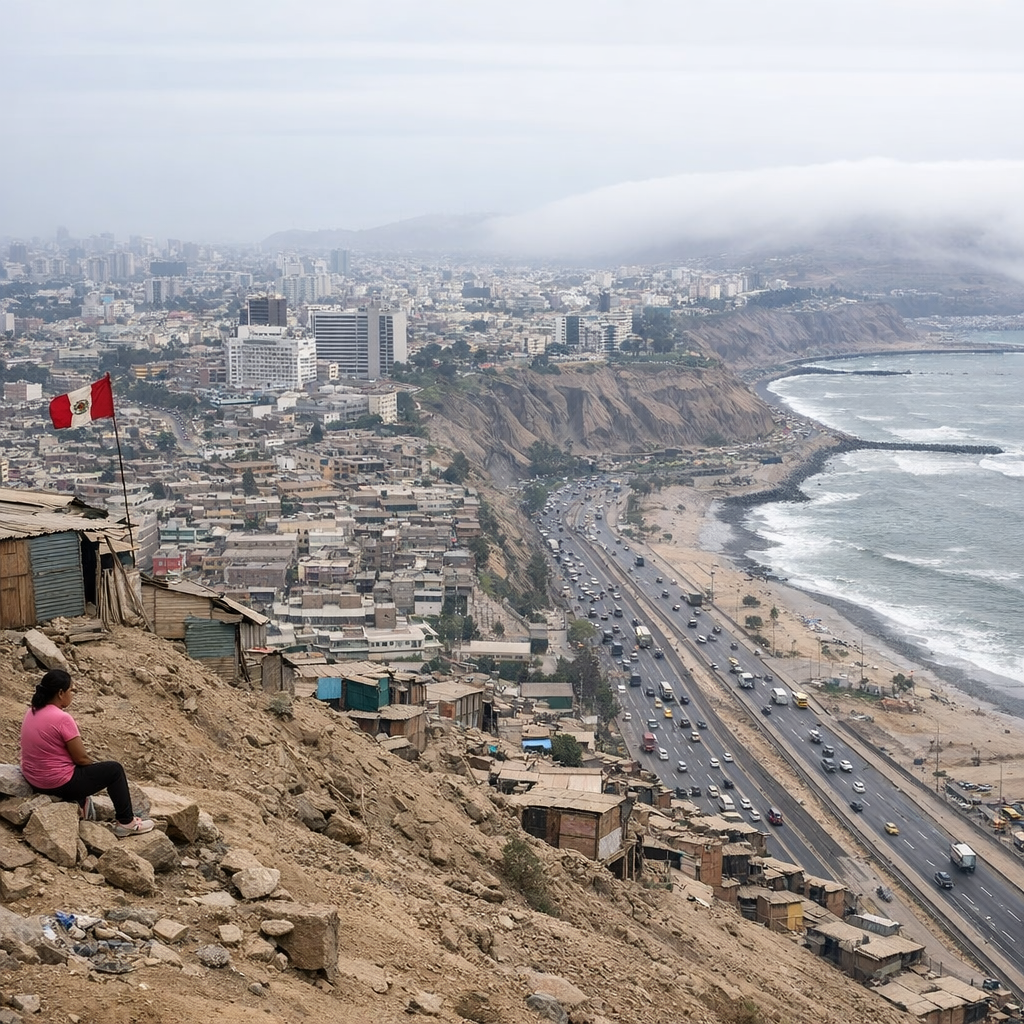
Lima, the capital of Peru, boasts a climate that defies typical expectations for a city located just 12 degrees south of the equator. Despite its tropical latitude, Lima experiences a mild, desert-like climate, largely influenced by the cold Humboldt Current flowing along the Pacific coast. This current moderates temperatures, resulting in a subtropical desert climate characterized by minimal rainfall and high humidity.
Seasonal Variations
Lima’s climate is marked by two primary seasons:
Summer (December to April)
During summer, Lima enjoys warm and humid conditions with temperatures ranging from lows of 18-22°C (64-72°F) to highs of 24-29°C (75-84°F). Mornings may start with dense fog, but it typically clears by the afternoon, revealing sunny skies. This season is also known for its vibrant sunsets that paint the sky with vivid colors.
Winter (June to October)
Winter brings cooler temperatures, with lows between 12-16°C (54-61°F) and highs of 16-19°C (61-66°F). The city is often enveloped in a persistent coastal fog known as “garúa,” leading to overcast skies and a light drizzle. Despite the high humidity, actual rainfall is scarce, making Lima one of the driest capitals globally.
Environmental Challenges
Beyond its unique climate, Lima faces several environmental challenges:
Air Pollution
Air quality in Lima has been a growing concern. In September 2025, the National Meteorology and Hydrology Service of Peru (Senamhi) reported that the air quality in Lima reached “unhealthy” levels, with concentrations of fine particulate matter (PM2.5) exceeding the Environmental Quality Standards. This poses significant health risks to residents, particularly those with respiratory conditions.
Water Scarcity
As a city situated in a desert region, Lima grapples with water scarcity. The Rimac River, a primary water source, faces pollution challenges, and the city’s rapid urbanization strains existing water infrastructure. Many residents, especially in peripheral areas, lack access to reliable potable water, leading to reliance on expensive water deliveries.
Climate Change Impacts
Climate change exacerbates Lima’s environmental issues. Rising temperatures and altered precipitation patterns threaten water availability and contribute to more frequent extreme weather events. Protecting the Andean ecosystems that feed Lima’s water sources is crucial for the city’s sustainability.
Understanding Lima’s distinctive climate and addressing its environmental challenges are essential steps toward ensuring a healthier and more sustainable future for its residents.