

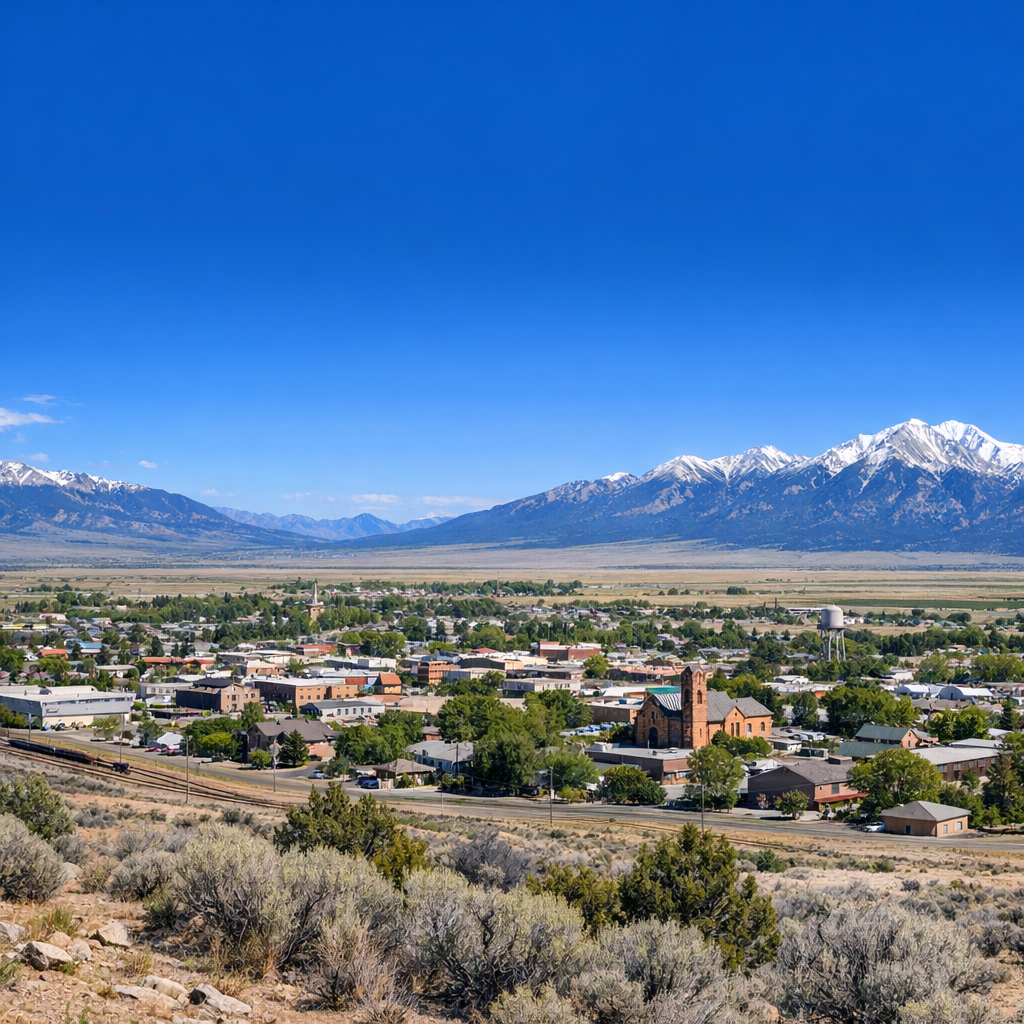
Alamosa, nestled in the San Luis Valley of Colorado, experiences a cold semi-arid climate (Köppen classification: BSk), marked by significant temperature fluctuations and minimal precipitation throughout the year.
Temperature Variations
The region showcases a stark contrast between its summer and winter temperatures. Summers are warm, with average high temperatures reaching around 81°F (27°C) in July, while winters are notably cold, with average lows dipping to approximately 0°F (-18°C) in January. Such extremes are characteristic of Alamosa’s high-altitude environment.
Precipitation and Snowfall
Annual precipitation in Alamosa averages about 7.7 inches (196 mm), with the majority occurring between July and September. Despite the low overall precipitation, the area receives an average annual snowfall of approximately 30 inches (76 cm), primarily during the winter months.
Growing Season and Frost Dates
The growing season in Alamosa is relatively short, typically spanning from early June to early September. The average last frost date falls between June 1 and June 10, while the first frost usually occurs between September 1 and September 10. This limited window poses challenges for agriculture and gardening in the region.
Sunshine and Clear Skies
One of Alamosa’s defining features is its abundance of sunshine. The area enjoys approximately 350 days of sunshine annually, contributing to its mostly clear skies year-round. This characteristic not only influences the local climate but also offers ample opportunities for outdoor activities and solar energy utilization.
Understanding these climatic patterns is essential for residents and visitors alike, as they influence daily life, agriculture, and recreational activities in Alamosa.